 Greenest
Guides
Language
EnglishCurrency
US dollar · $Prices on GetYourGuide appear in your chosen currency.
Guide · Best time
Best time of year to visit Ubud: rain, temperatures and Nyepi
The best time of year to visit Ubud depends less on heat, which barely changes, than on rain, which changes a lot. Here is the year month by month, with what it means for a day out.
Check availabilityfrom $14 · free cancellation possible
Editorial team, ubuddaytour.comUpdated October 24, 2026read in 7 minutes12 sources
Quick answer
- 01Driest months
- July and August, 27.6 and 36.4 mm of rain at the airport.1
- 02Wettest months
- December to February, up to 350.7 mm.1
- 03Temperature
- Highs of 29.2 to 31.6 °C at the airport, all year.1
- 04Avoid if you can
- Nyepi, in March or April, when Bali stops.2
- 05Our pick
- April to October for clear pools and firm paths.
The short answer: follow the rain
Bali has a tropical climate with a clear wet season and a drier season, and that rhythm decides the best time of year to visit Ubud. The nearest long climate record comes from Ngurah Rai airport on the south coast, where January averages 350.7 mm of rain and July only 27.6 mm.1 The gap between the two halves of the year is large, which is why the season matters so much here.
Ubud lies inland and higher than the airport, in the central part of Bali, so treat those figures as the island's pattern rather than a gauge in the town.3 The hills can behave differently from the coast, so pack for a shower in any month. Treat the numbers as a guide to the odds of a dry day, not a promise for any single date.
For most day trips, the drier months from April to October give the clearest waterfall pools, the firmest paths and the best chance of a sunrise on the volcano. The wetter months bring the greenest terraces, the loudest falls and the most dramatic skies. Neither is wrong; they suit different trips. Pick by the trip you want, then by the month.
The year
Ubud through the seasons
-
January
Wettest month
350.7 mm at the airport, the terraces at their greenest.1
-
March or April
Nyepi
-
Late May
Food festival
The Ubud Food Festival runs for a few days, in late May in recent editions.
-
July
Driest month
27.6 mm at the airport, clear pools.1
-
November
Rains return
131.2 mm at the airport, and highs of 31.6 °C.1
Rain month by month
At the airport, rainfall climbs from 64.4 mm in October to 131.2 mm in November and 327.4 mm in December.1 January is the peak, at 350.7 mm; February brings 289.8 mm and March still 231.1 mm.1 The wettest months are also the months when the rice is greenest and the rivers fullest.
From April the dry season takes hold: 107.4 mm in April, 94.7 mm in May and 67.9 mm in June.1 July and August are the driest, with 27.6 and 36.4 mm, and September brings 59.4 mm.1 Even in those months a shower can still come, so plan outdoor time for the morning and carry a light rain layer for the afternoon.
As for how often does it rain in Ubud, no official source gives a usable count of rainy days for the area, so the totals are the honest guide. Read a wet month as a month with more interruptions, not a month without sunshine, and keep each day flexible. Make outdoor plans for the morning and keep indoor ones in reserve.
Rainfall
Monthly rain at the airport, mm
mm
Month by month
Heat and rain at Ngurah Rai airport
| Month | Average high | Average low | Rain |
|---|---|---|---|
| January | 30.8 °C | 24.8 °C | 350.7 mm |
| March | 31.1 °C | 24.8 °C | 231.1 mm |
| April | 31.2 °C | 24.8 °C | 107.4 mm |
| May | 30.7 °C | 24.5 °C | 94.7 mm |
| July | 29.2 °C | 23.8 °C | 27.6 mm |
| August | 29.2 °C | 23.5 °C | 36.4 mm |
| October | 31.1 °C | 24.4 °C | 64.4 mm |
| December | 31 °C | 25.1 °C | 327.4 mm |
Highs and lows averaged from US federal daily records and rainfall from Japan Meteorological Agency normals, 1991 to 2020, at the airport on the coast.1
Three seasons
Wet, shoulder and dry
Greenest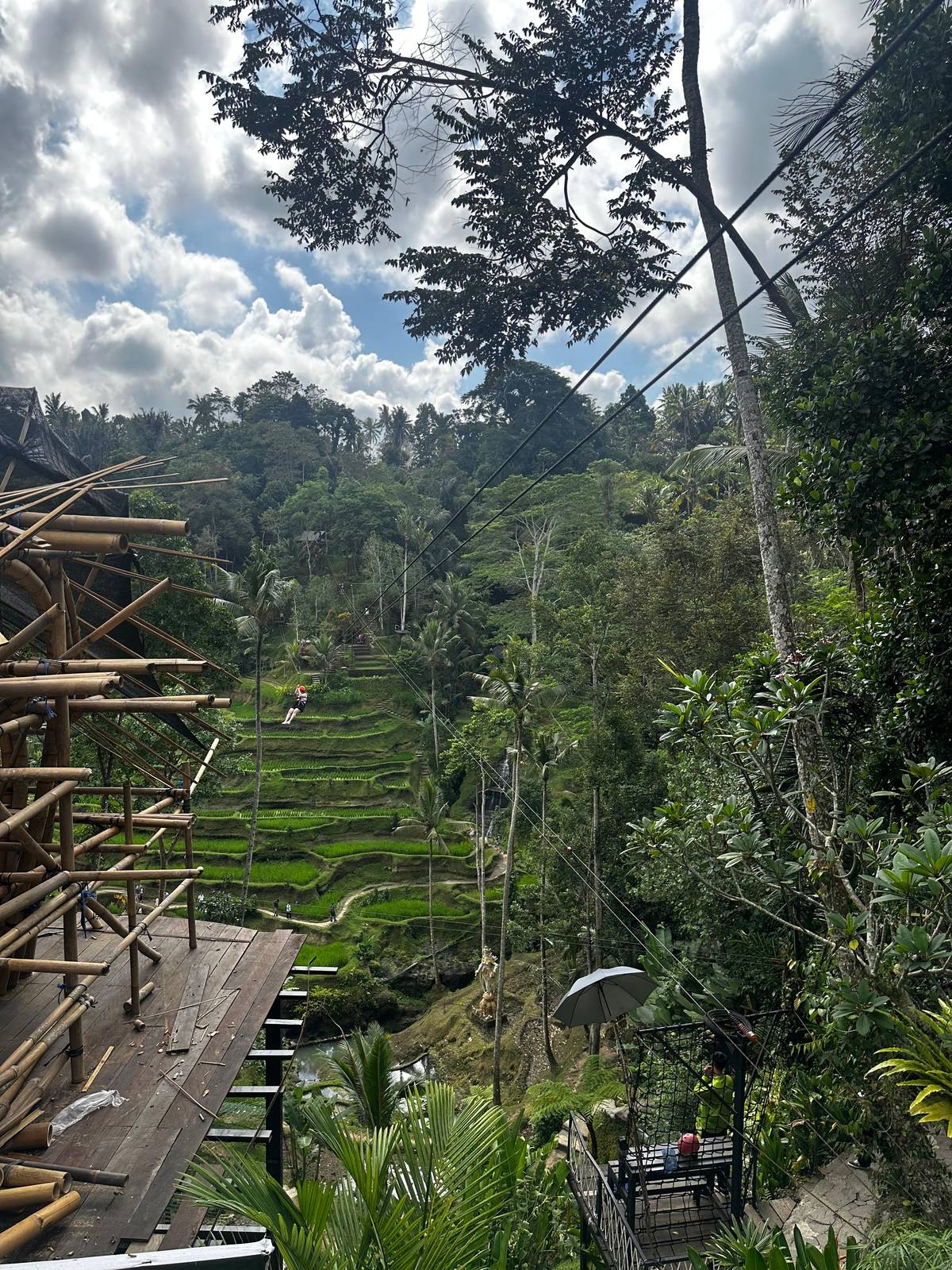 Still green
 Driest
Decision helper
When should you go?
Start from what matters most to your trip.
Bali applies specific rules to follow for 24 hours during Nyepi. Although Nyepi is a religious holiday celebrated by the Hindus, non-Hindus, including foreigners and locals, are not exempted from these regulations.
Temperatures barely change
Heat is the constant. At the airport the average daily high bottoms out at 29.2 °C in July and August and tops out at 31.6 °C in November, and the average low from 23.5 °C in August to 25.1 °C in December.1 That is a range of only a few degrees across the whole year. Light clothes that dry quickly are the most useful thing you can pack at any time of year.
Ubud sits higher in the hills, so its days can feel a touch fresher and its nights cooler than the coast, especially in the dry months; the airport figures give the pattern, not the exact reading in town. The average temperature in Ubud by month follows the airport's gentle curve rather than any sharp seasons. A morning walk before the heat builds is the most comfortable part of any day out.
The high ground is cooler still. The rim of the Batur caldera and the summit of the volcano, at 1,717 m, are cold before dawn, and the jeep tours ask you to bring warm clothes.5 Pack a fleece for a sunrise trip, whatever the month. Bring a long-sleeved layer for the drive back, too, as cars are kept cool.
Pack for the season
What the months ask of your bag
01
Wet season
- A light rain jacket or poncho
- Shoes that grip in mud
- A dry bag for your phone
02
Dry season
- Sunscreen and a hat
- Water for the hot middle of the day
- A warm layer for a sunrise trip
Party price
Price a day out for your group
Add your party to price a shared day in any season.
People
Total from$30
per head from $15
Check availabilityfree cancellationThis sum multiplies a listing's GetYourGuide starting price by the number in your party and converts it with the day's ECB rate; checkout shows the binding amount.
Video
Is the Bali rainy season enjoyable? Seven days in the rain
Nothing loads until you tap play.
What the seasons do to waterfalls and terraces
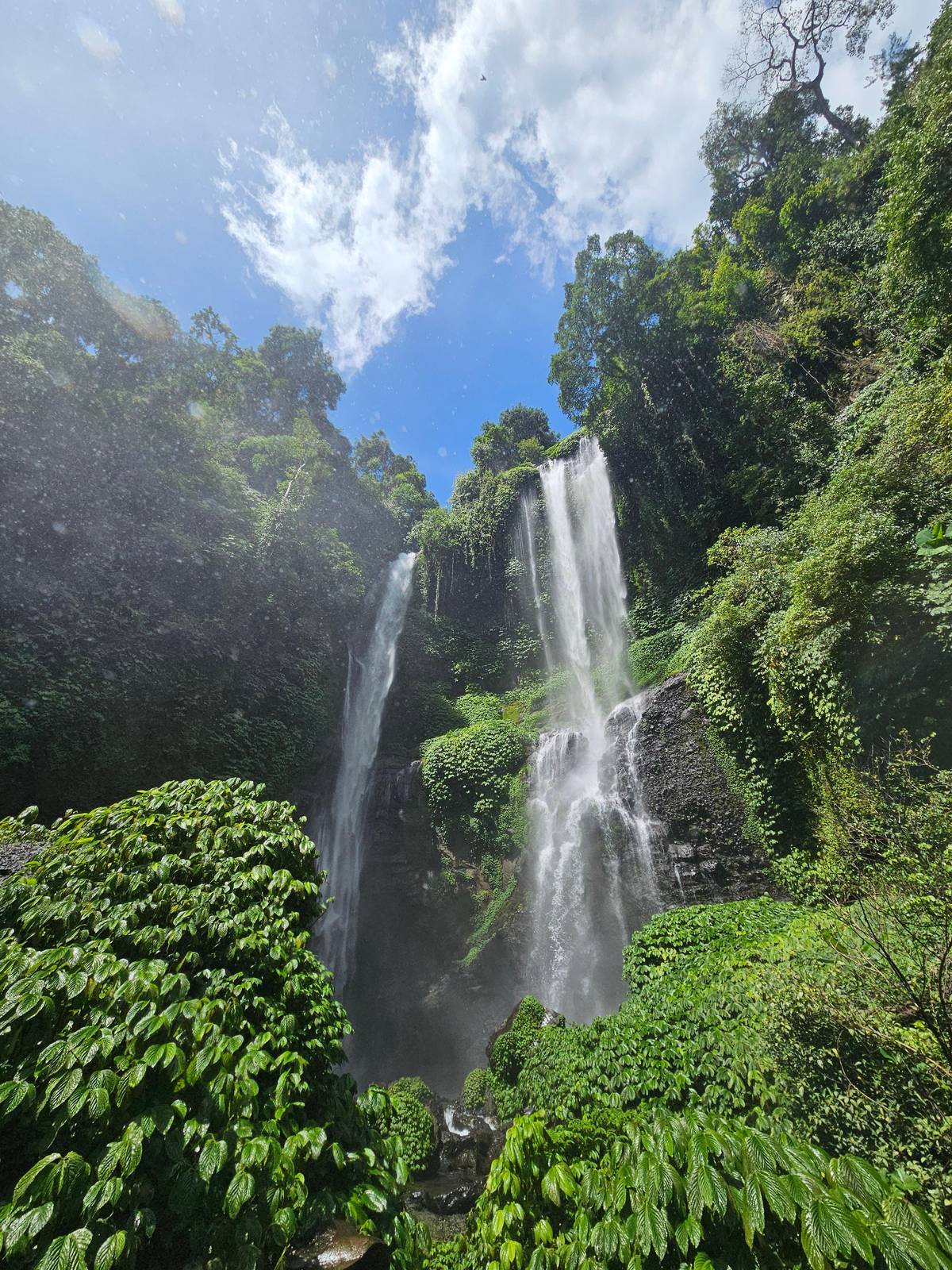
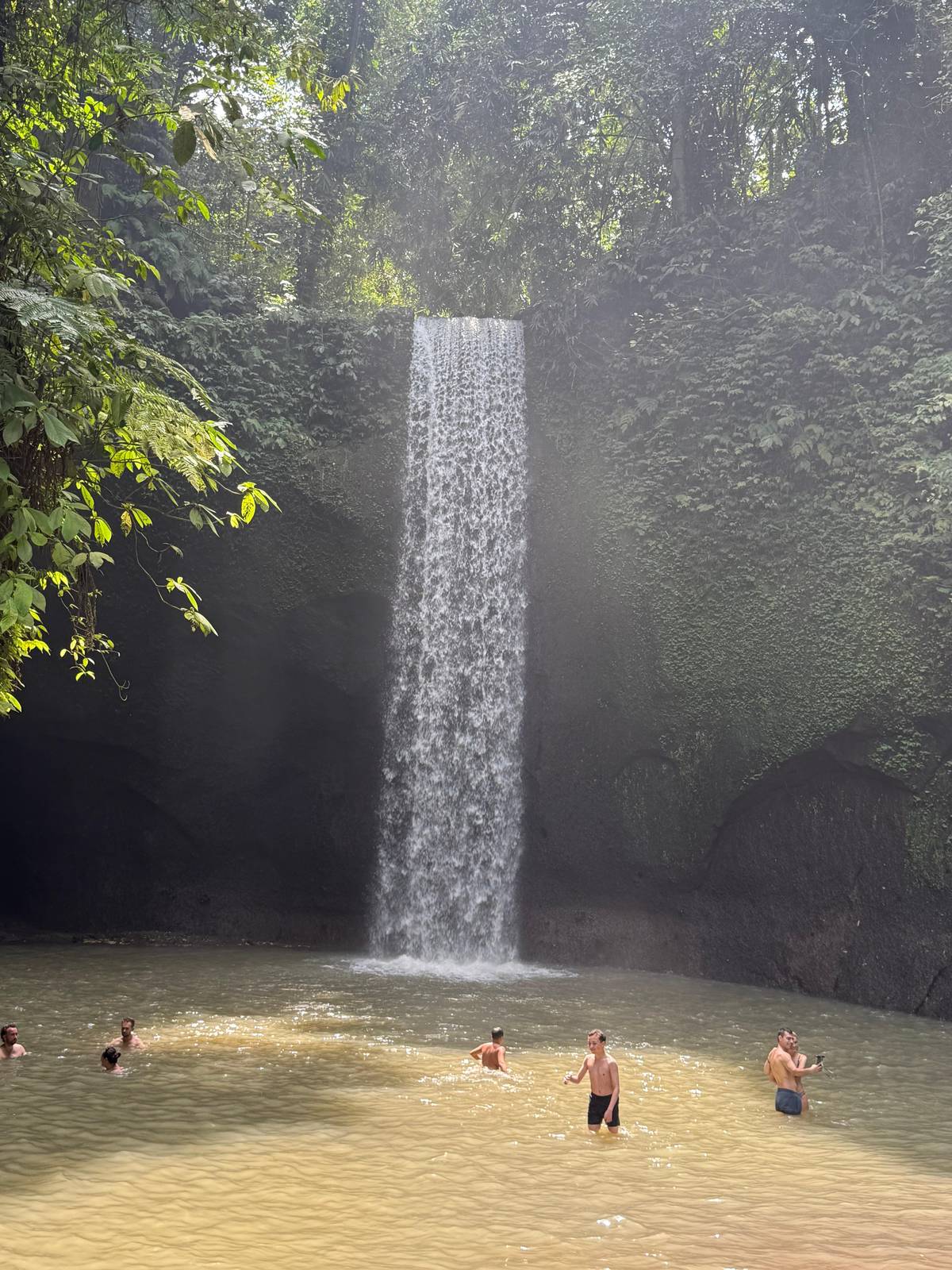
Rain changes the waterfalls more than anything else. The operator of the private tour warns that after rain the falls can run brown and that stops may be changed for safety. Another tour notes that Kanto Lampo may close for a while after heavy rain or flooding. Ask your driver-guide on the morning which fall is running clear; they see the rivers daily.
In the dry months the pools are clearer and calmer, and the swims the tours list are at their best. In the wet months the falls are fuller and more dramatic, and the paths muddier, so shoes that grip and a change of clothes matter even more. If a swim is the point of your day, clear water is worth planning for.
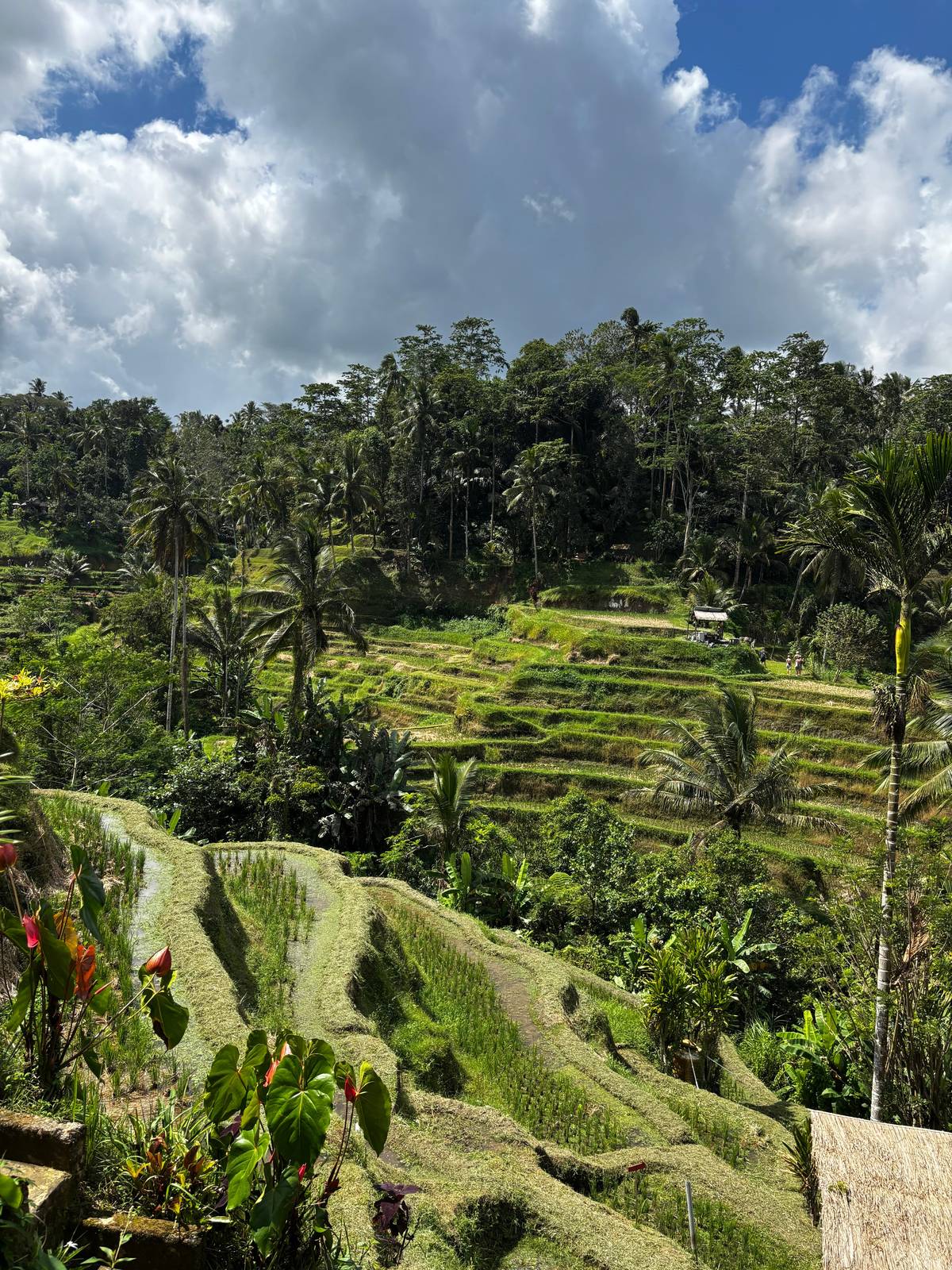
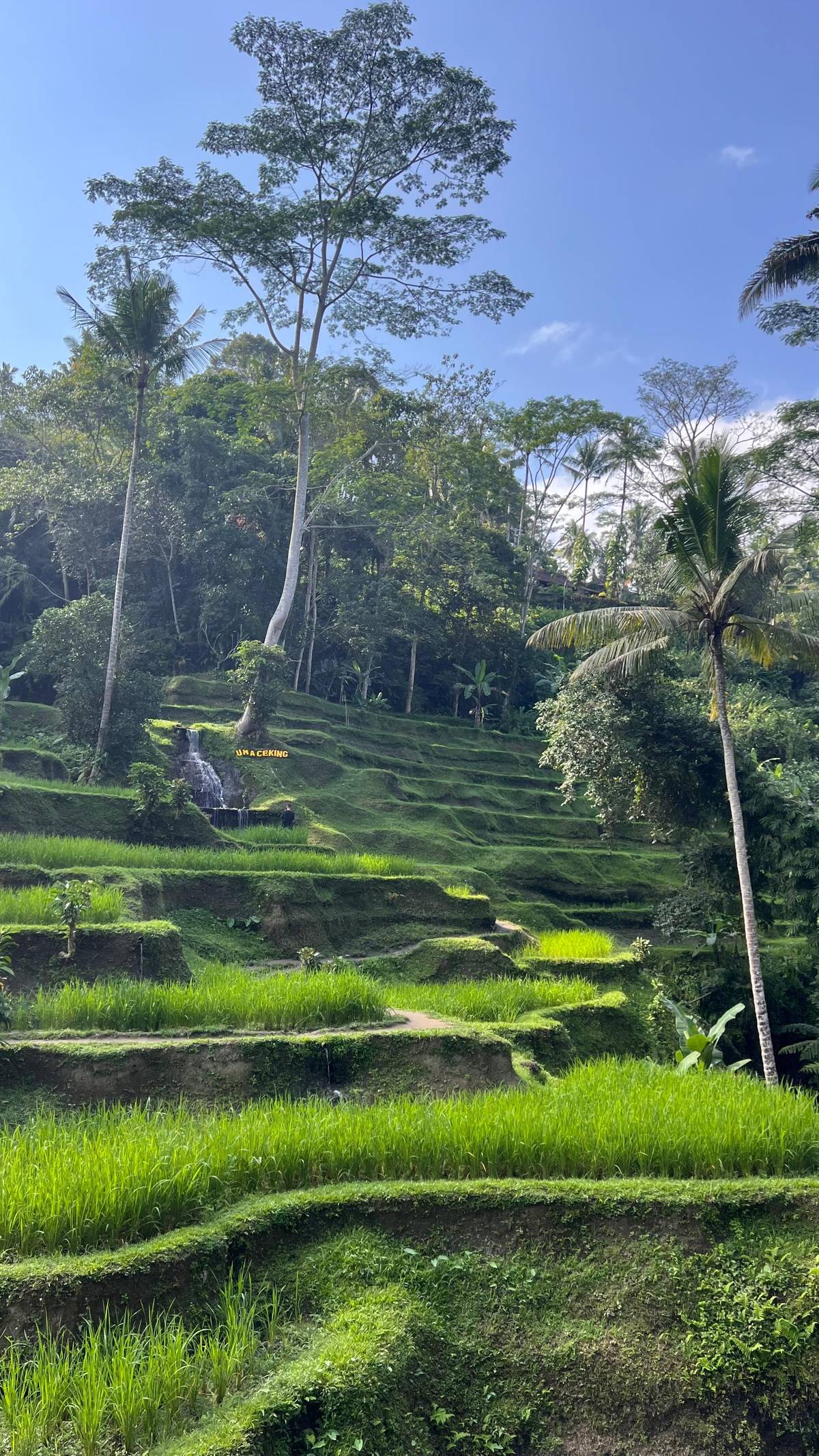
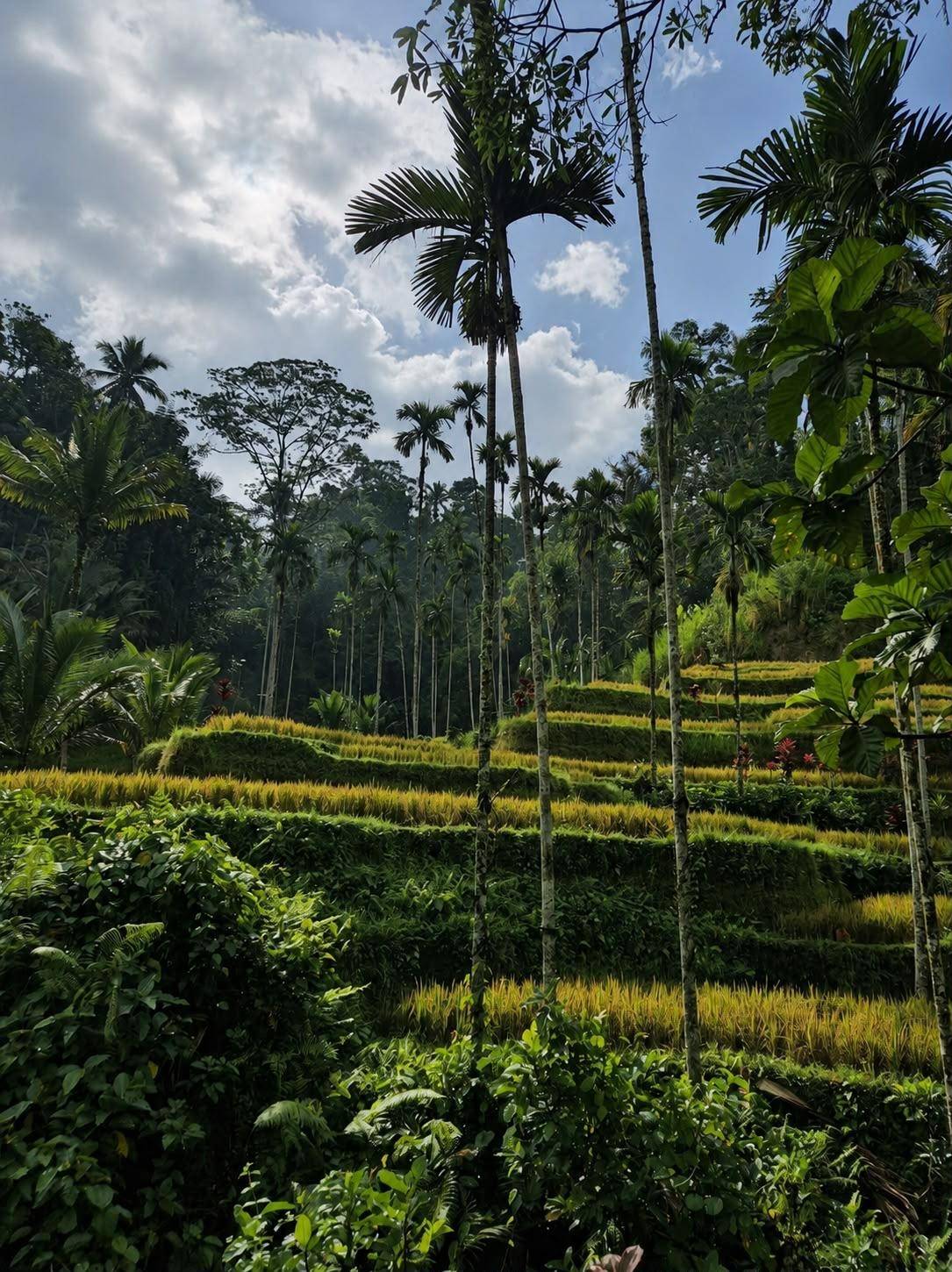
The rice terraces follow their own cycle of planting, growing and harvest, which runs through the year rather than one season. Flooded paddies, deep green rice and golden fields can all appear in the same valley in the same week, so there is no wrong month for Tegallalang. Ask your guide where the planting is at; the color of the fields can change from one valley to the next.
Nyepi and the festival calendar
One date matters more than any forecast. Nyepi, the Balinese day of silence, falls in March or April and moves from year to year.2 For 24 hours everyone on Bali, visitors included, stays in without bright lights or noise, and all shops and markets close.46 Restaurants close too, hotels keep guests indoors, and the island falls quiet in a way few places ever do.
Ngurah Rai International Airport and all transport hubs close too, so no flights land or leave and no tours run.7 On the eve, villages parade ogoh-ogoh effigies in the Ngrupuk ritual and then burn them, an unforgettable night if you are in Bali for it.8 If your flight lands or leaves on Nyepi, change it; no flight will move until the day of silence ends.
Ubud has its own festivals. The Ubud Food Festival runs for less than a week, in late May in recent editions, and the Ubud Writers and Readers Festival is held every year.910 Both fill the town, so book rooms early if your dates overlap with them. Check the dates early and book your room once they are set.
Crowds, early starts and booking
Whatever the month, timing helps. The private tour's operator recommends starting early to avoid crowds, and warns that Kanto Lampo can mean a wait for photos at peak hours. Leaving at sunrise also gives you the softest light for photos at the terraces.
Book with the forecast in mind. Calling off our private tour is free up to 24 hours in advance, and you pay nearer the date. If heavy rain is forecast for the hills, move the day rather than see the falls brown. A flexible booking costs nothing extra and takes the pressure off a cloudy forecast.
Remember the Bali tourist levy whatever your season: foreign visitors pay Rp 150,000 once per trip, cashless, online before arrival or at the airport and port.1112 Paying in advance saves a queue on arrival. Keep the voucher with your passport in case it is checked on arrival.
Our month-by-month advice
January to March: the wettest stretch, with the greenest terraces and the fewest dry days for swimming. Plan flexible days, keep museums and classes for the afternoons, and watch for Nyepi in March.2 Bring a light rain layer and keep afternoons open for cafes, galleries and a cooking class.
April to June: the rains ease and the countryside is still lush. This is a sweet spot for waterfalls and terraces together, with the Ubud Food Festival in late May. July and August are the driest months, with clear pools and cool mornings on the volcano. Book the private day for a morning in the middle of your stay, when you have the most choice of dates.
September and October stay fairly dry, a good time for long day trips. November and December bring the rains back, and the falls fill again. Wherever you land in the calendar, an early start and a flexible booking make the difference. In those months, plan the waterfall day early in your stay, while the pools are still clear.
Your day in Ubud
Terraces, a water temple and three falls.
Pick a date, get collected in the Ubud area, and cancel free up to 24 hours before.


You ask,we answer.
Which months are driest?
July and August. At Ngurah Rai airport they average 27.6 and 36.4 mm of rain.1
Which months are wettest?
December to February. January averages 350.7 mm at the airport, the highest of the year.1
Is it hot all year?
Yes. Average highs at the airport stay between 29.2 °C and 31.6 °C.1
When does Nyepi fall?
In March or April. The date moves each year; for 24 hours Bali stops and the airport closes.247
Do tours run in the rainy season?
Yes. They run all year, but after rain the falls can run brown and stops may change.
Is it cold on Mount Batur?
Before dawn, yes. Jeep tours ask you to bring warm clothes for the early morning.
Are the climate figures for Ubud itself?
No, the airport. They come from Ngurah Rai airport on the coast; Ubud is higher and inland.1
Sources
Sources and evidence
- 1US NCEI and the Japan Meteorological AgencyDaily highs and lows (Global Summary of the Day) and rainfall normals (Tokyo Climate Center), Station Ngurah Rai airport (WMO 97230), 1991 to 2020↩
- 2Indonesia Travel (Ministry of Tourism, Republic of Indonesia)Planning to Spend Nyepi in Bali? Read These Frequently Asked Questions↩
- 3Indonesia Travel (Ministry of Tourism, Republic of Indonesia)Find Serenity in Ubud, Bali↩
- 4Indonesia Travel (Ministry of Tourism, Republic of Indonesia)Planning to Spend Nyepi in Bali? Read These Frequently Asked Questions↩
- 5WikipediaMount Batur↩
- 6Indonesia Travel (Ministry of Tourism, Republic of Indonesia)Planning to Spend Nyepi in Bali? Read These Frequently Asked Questions↩
- 7Indonesia Travel (Ministry of Tourism, Republic of Indonesia)Planning to Spend Nyepi in Bali? Read These Frequently Asked Questions↩
- 8Indonesia Travel (Ministry of Tourism, Republic of Indonesia)Planning to Spend Nyepi in Bali? Read These Frequently Asked Questions↩
- 9WikipediaUbud↩
- 10WikipediaUbud↩
- 11Bali Provincial Government (Love Bali, the official tourist levy system)FAQ↩
- 12Bali Provincial Government (Love Bali, the official tourist levy system)FAQ↩