 This page's pick
Legong at the palace
Evening, in the courtyard
- Starts
- 7:30 PM daily
- Length
- About 90 minutes
- Refunds
- None
Guides
Language
EnglishCurrency
US dollar · $Prices on GetYourGuide appear in your chosen currency.
Guide · Town center
Ubud Palace is still a royal home, open in part to visitors by day and a stage for dance by night. Across the road the market sells the island's crafts. Here is how to see both.
Editorial team, ubuddaytour.comUpdated October 24, 2026read in 6 minutes33 sources
Ubud Palace, Puri Saren Agung, is the official residence of Ubud's royal family, in the very heart of the town.1 Part of it is still lived in by the family, and some parts are open to the public, so you walk through carved gates into courtyards while daily life carries on behind the walls you cannot pass.3 Respect the closed doors; they are a family's private rooms, not a museum that has run out of space.
It stands where Jalan Monkey Forest meets Jalan Raya Ubud, the main street that runs east to west through the town.25 That makes it the natural starting point for a walk: the art market is across the road, the Saraswati water garden a few minutes west, and the Monkey Forest at the bottom of the hill to the south. Everything you need for a half day in the center lies within a short stroll of its gates.
Come with modest expectations of size and generous ones of detail. This is not a grand fortress but a cluster of pavilions, shrines and gateways, and its beauty is in the stone carving, the gilded doors and the frangipani trees in the courtyards. Walk slowly, look up at the gate towers, and you will see why visitors come back at night.
History
1800 to 1823
Under the reign of Tjokorda Putu Kandel.6
1917
Badly damaged, then quickly restored.7
1928
The palace welcomes visitors from abroad.7
1930s
Among the earliest places to stay in Ubud.8
1936
The King of Ubud backs a painters' cooperative.9
1956
The town's art museum, near the palace.10
The palace in its present form was built in traditional Balinese style under Tjokorda Putu Kandel, who reigned from 1800 to 1823.6 It was badly damaged in the 1917 earthquake, restored quickly because the family lived there, and opened to foreign guests in 1928.7
Its last ruling monarch, Tjokorda Gede Agung Sukawati, lived from 1910 to 1978, and the palace is still owned by the royal family.11 It was also one of Ubud's first hotels, from the 1930s, a sign of how early the town's rulers welcomed outsiders.8
Many of the stone carvings are by I Gusti Nyoman Lempad, the Ubud artist whose work you also find in the town's museums.12 North of the palace stands Pura Marajan Agung, the royal family's private temple, which is not open to visitors.13 Look at the gate from the street and you see how closely palace and temple sit together. Ask a guide to point out his hand in the reliefs; once you know the style you start seeing it all over town.
Plan your time
After dark
| Show | When | Length | Price |
|---|---|---|---|
| Legong at the palace | Daily, 7:30 PM | About 90 minutes | from $6 |
| Kecak and fire dance | Several nights, 7:00 PM | 1 hour | from $6 |
| Monkey Forest stage | Sat and Sun, 11:00 AM, 4:00 PM | Weekend shows | Inside the forest |
Times from the GetYourGuide listings and the Monkey Forest's own site; prices are from-prices.14
Three ways to see it
This page's pickEvening, in the courtyard
 Most dramatic
 Most in one day
Palace, market and more
Decision helper
Choose by what you want from the visit.
Some courtyards are open to the public by day.3
Daily at 7:30 PM in the palace courtyard.
Kecak tickets cancel free up to 24 hours before; the Legong does not.
Handicrafts made in Bali, opposite the palace.4
One private day gives the palace and market half an hour each.
After the 1917 earthquake, palace structures suffered significant damage, but since it was the residence of the royal family it was quickly restored, before being opened to foreign guests in 1928.
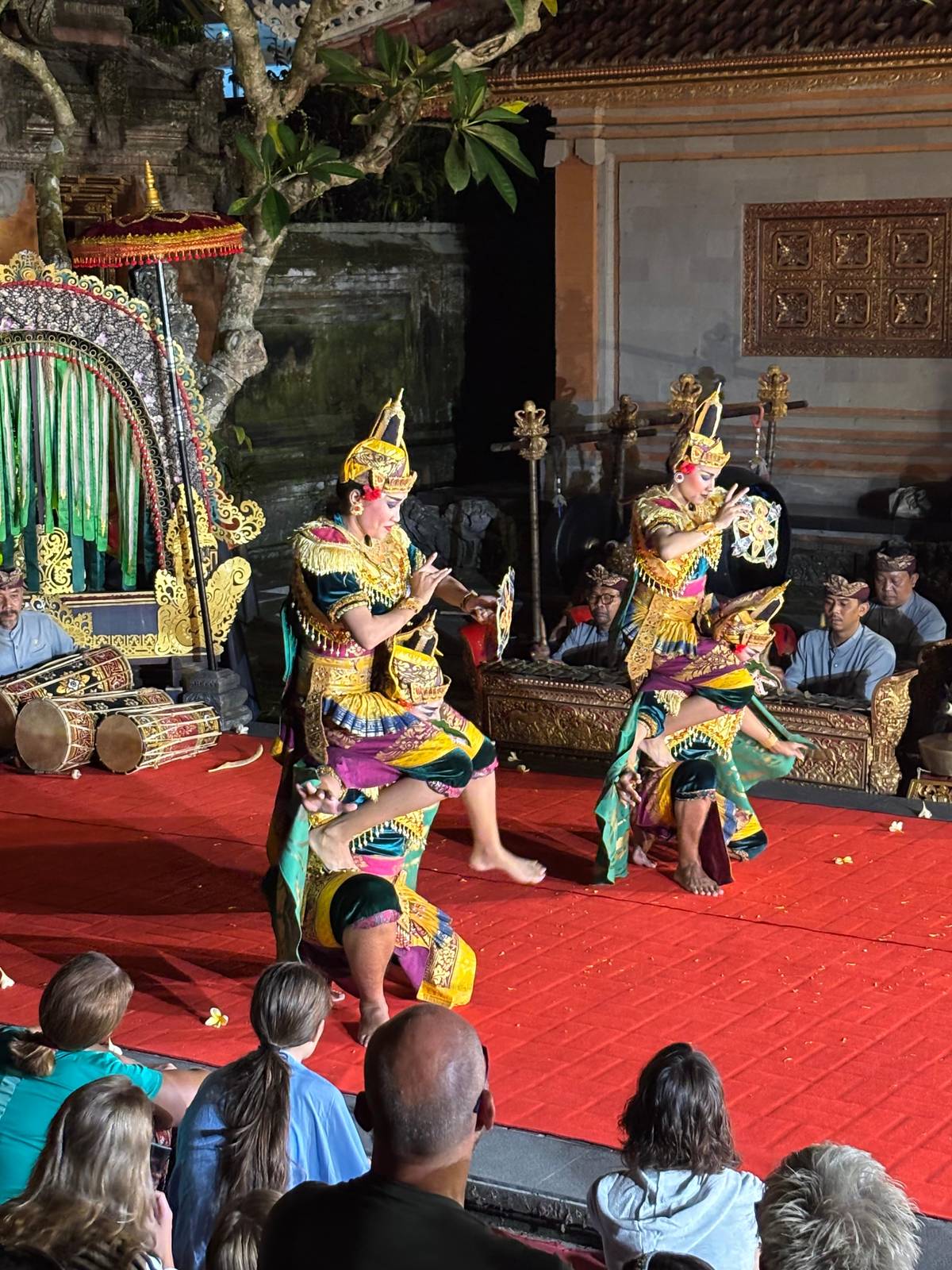
After dark the palace courtyard becomes a stage, and traditional Balinese dances are often performed there in the evening.15 The Legong dance in Ubud is the one most closely tied to the palace: a ticket for the show starts from $6, and it runs daily at 7:30 PM for about 90 minutes. Gamelan players sit at the side of the stage, and the carved gate behind the dancers is lit like a backdrop.
Children and adults pay the same, the seats are wheelchair and stroller accessible, and the seller advises arriving at least 45 minutes early for a good seat. Note that the ticket cannot be refunded once bought, unlike the Kecak tickets. Its rating, 4.37 from 4,421 reviews, is lower than the tours around Ubud, so go for the setting and the music rather than polish.
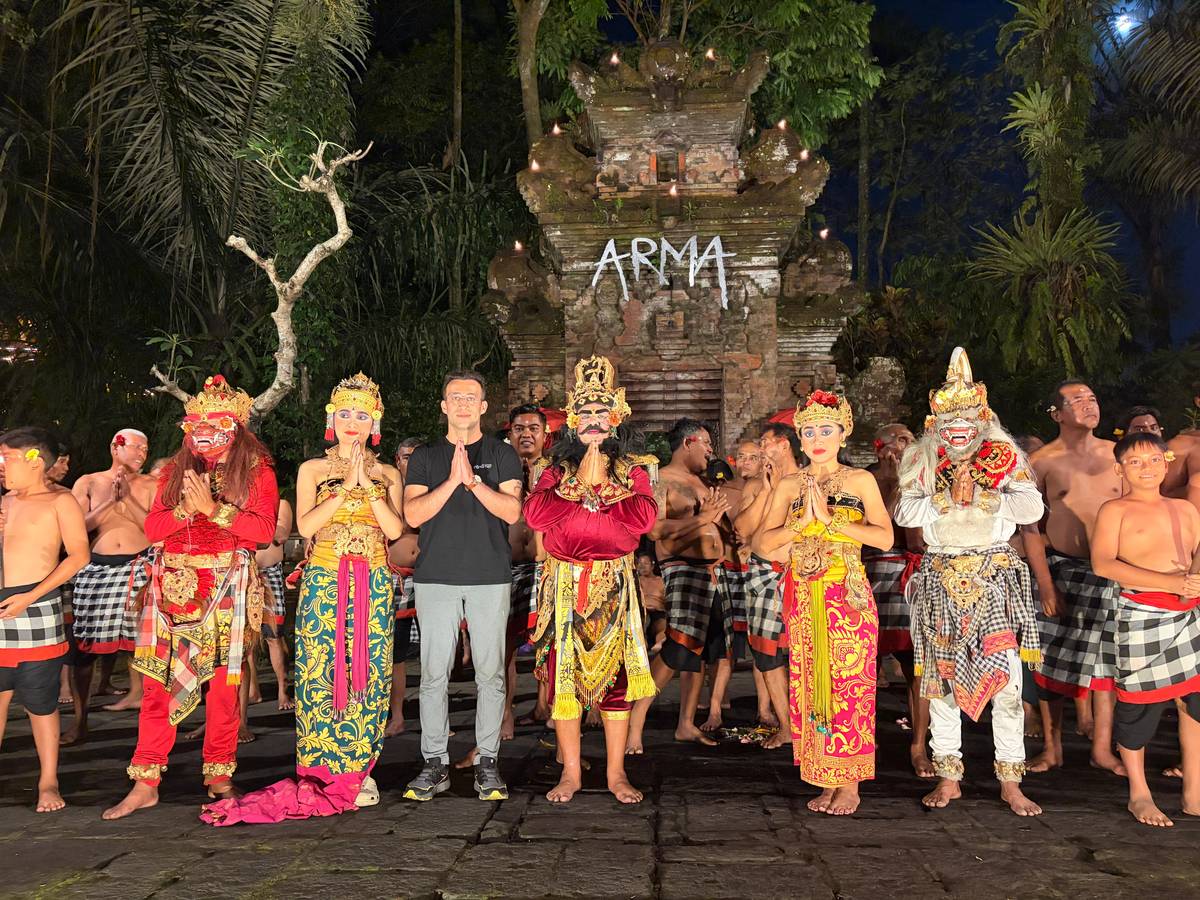
Ubud has a long dance tradition. Among the troupes performing around the town is the Peliatan group, the first Balinese troupe to travel abroad with the Legong.16 If you prefer the chanting Kecak with fire, tickets start from $6 for shows at several venues on different nights, starting at 7:00 PM.
Map
First the town between the palace and the forest, then the terraces and the waterfalls around it, then the volcano, the north and the harbour for Nusa Penida.
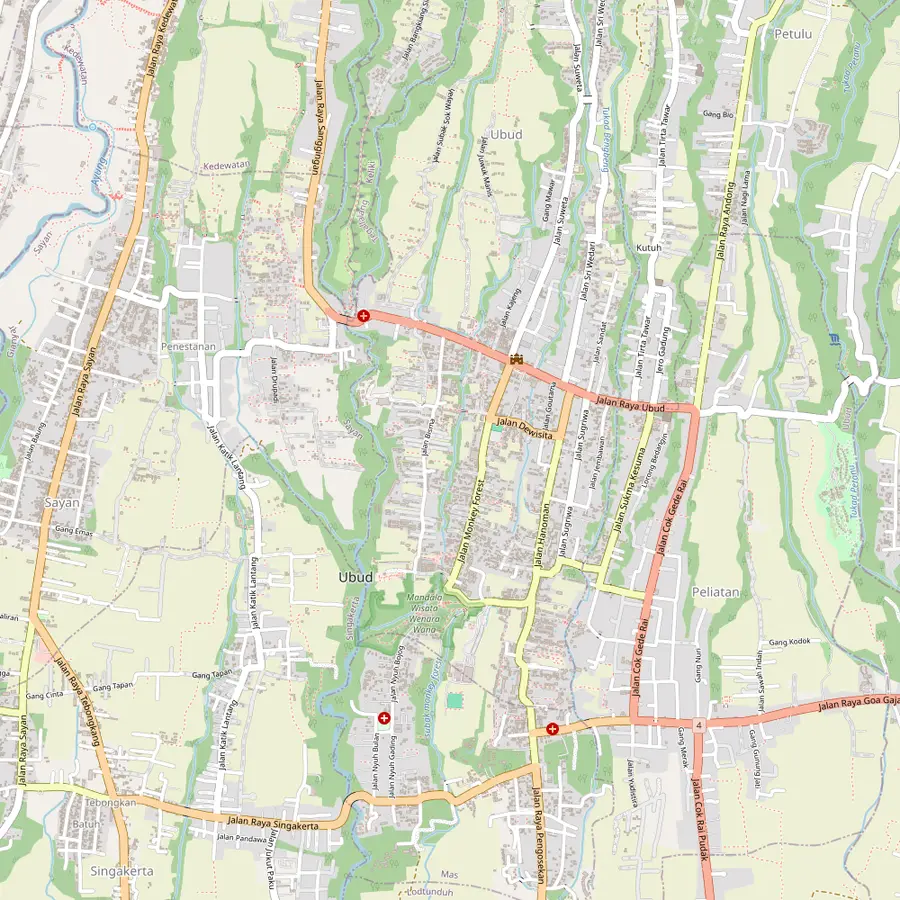 1Ubud Palace2Ubud Art Market3Museum Puri Lukisan4Sacred Monkey Forest Sanctuary5Pura Gunung Lebah6Campuhan Ridge Walk7ARMA
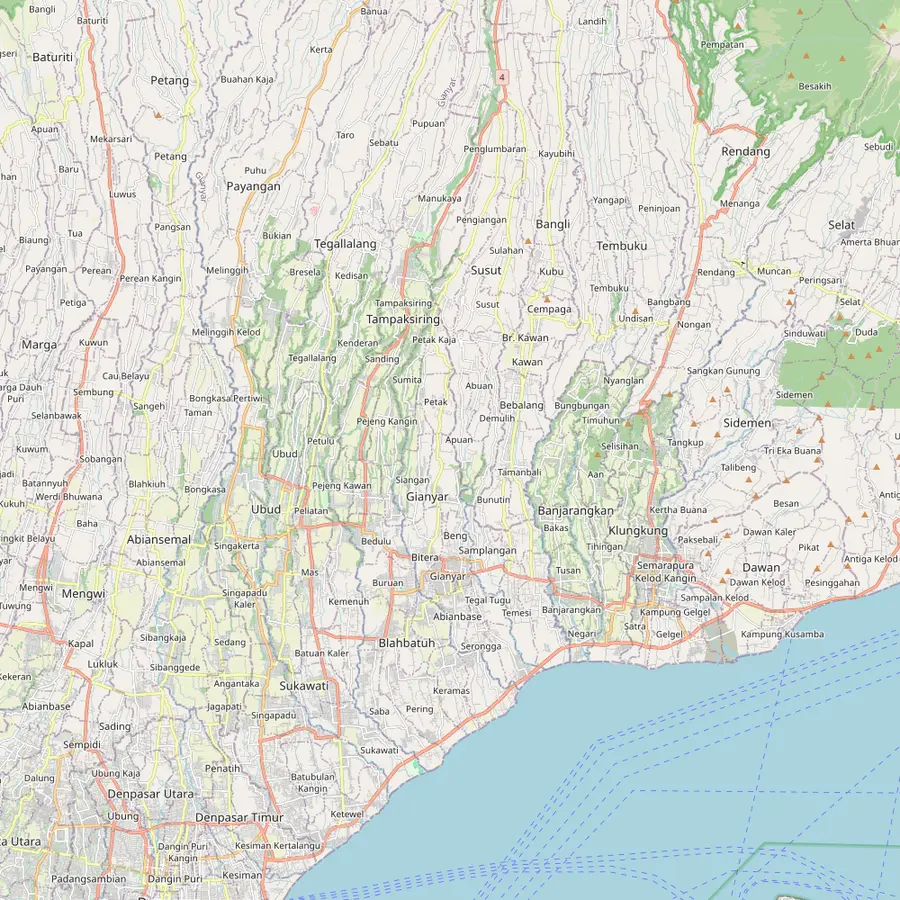 1Ubud Palace8Tegallalang Rice Terrace9Tirta Empul10Tukad Cepung11Tibumana12Kanto Lampo13Tegenungan
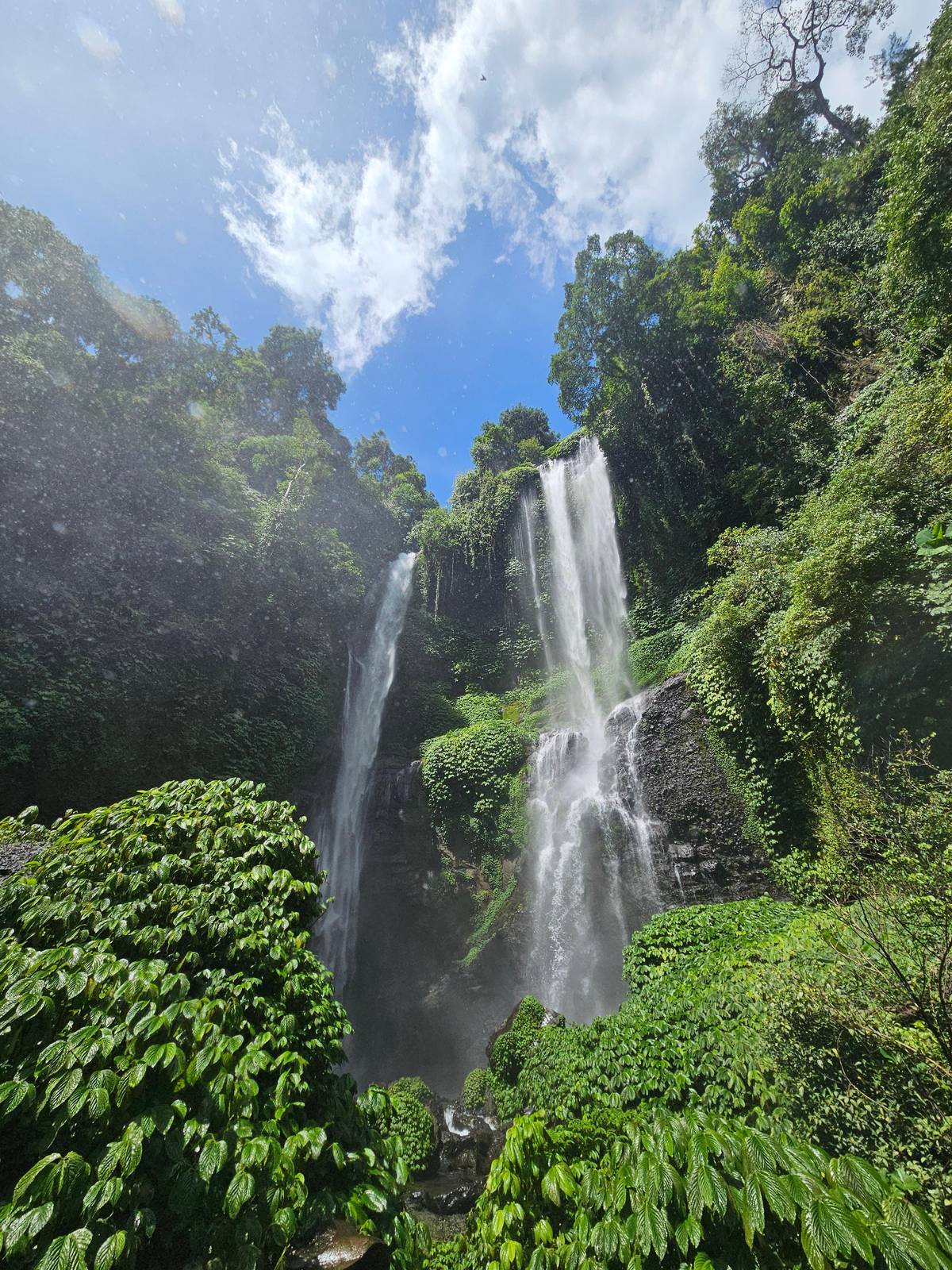
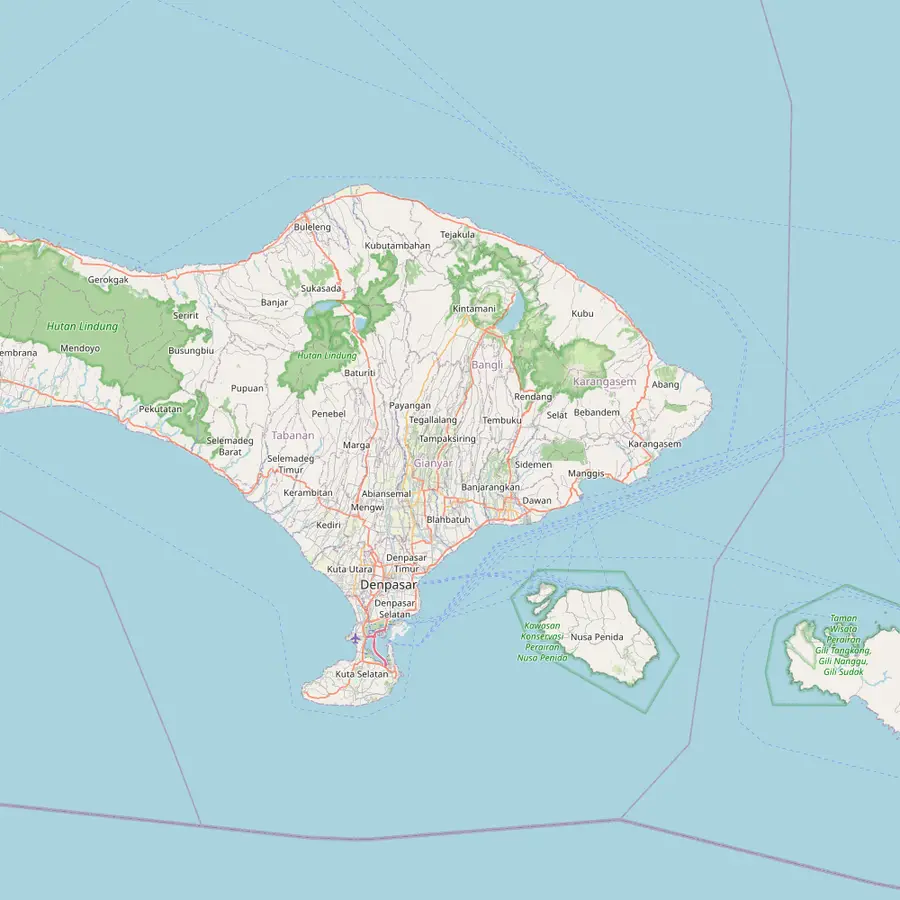 1Ubud Palace14Mount Batur15Sekumpul Waterfall16Kusamba harbour17Ngurah Rai airport
Puri Saren Agung, the royal residence at the corner of Jalan Raya Ubud and Jalan Monkey Forest; evening dances in the courtyard.1215
In Google Maps ↗Stalls of handicrafts made in Bali, beside the palace.4
In Google Maps ↗The town's art museum, opened in 1956.10
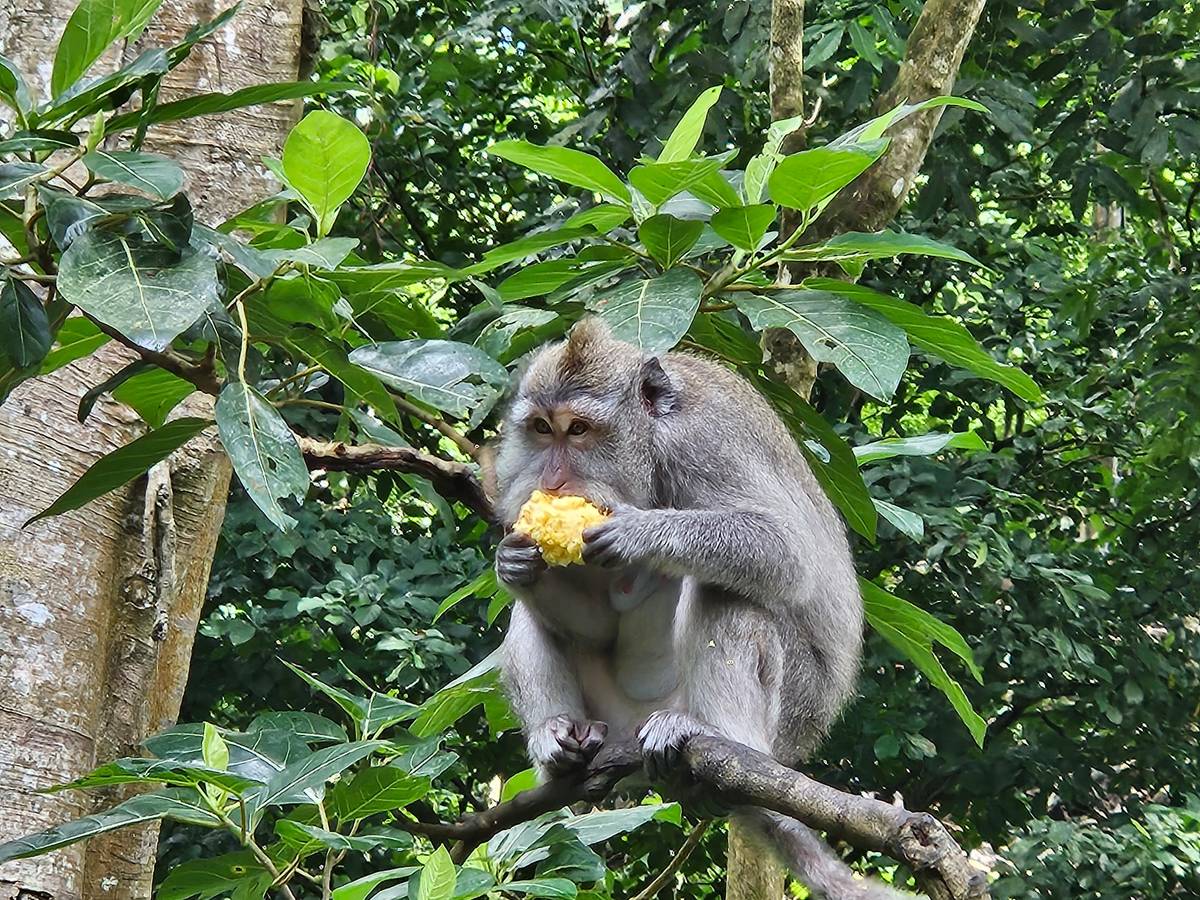
In Google Maps ↗About 12.5 hectares of forest in Padangtegal, home to about 1,054 long-tailed macaques; open 9:00 AM to 6:00 PM.171819
In Google Maps ↗The temple at the Campuhan river confluence, tied to an 8th-century legend of Rsi Markandya.20
In Google Maps ↗A walk suggested for the cooler afternoon hours.21
In Google Maps ↗The Agung Rai Museum of Art, one of the town's museums and a Kecak venue.22
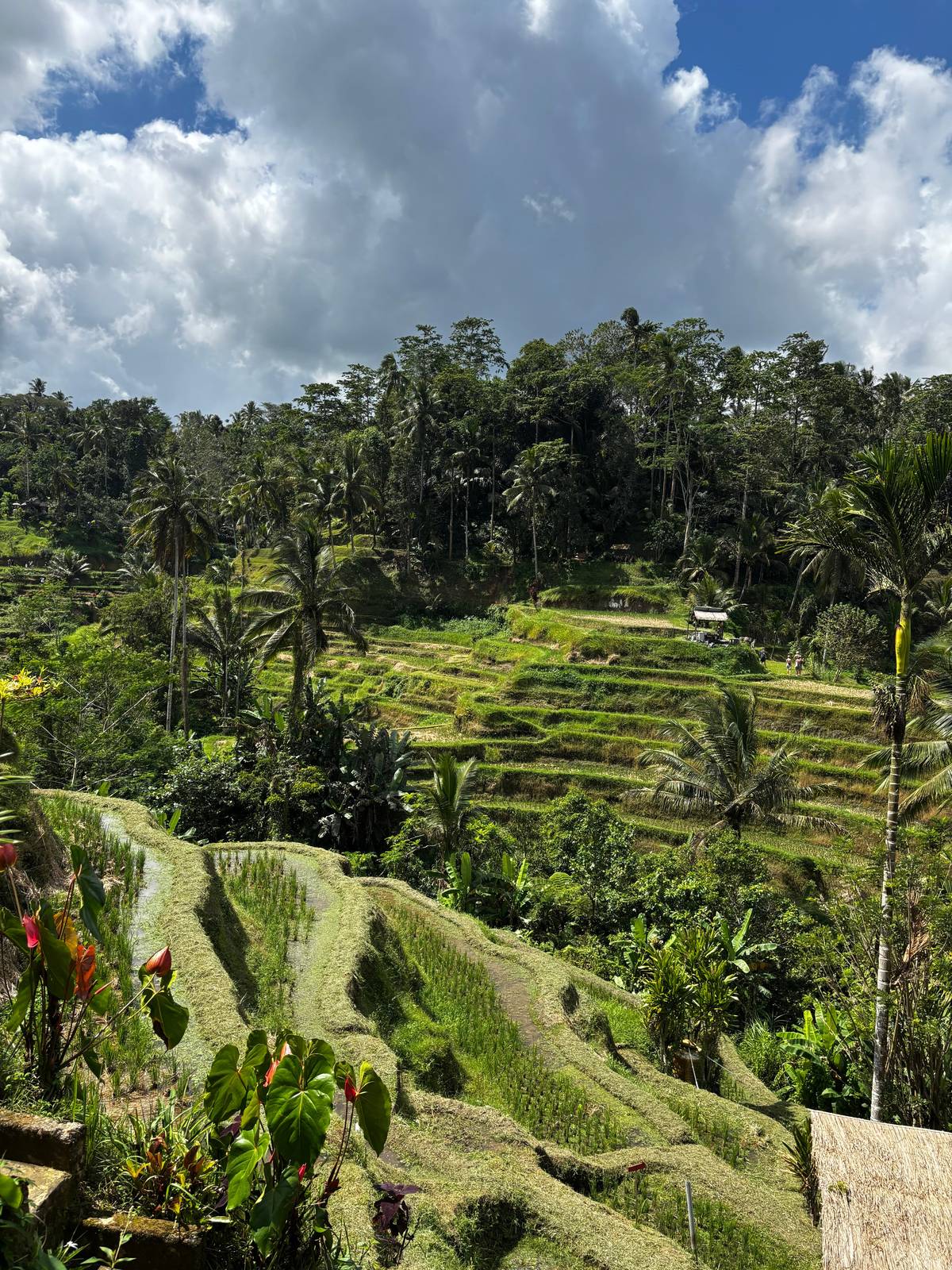
In Google Maps ↗Subak terraces about a 20-minute drive north of Ubud; the site tour's first stop.23
In Google Maps ↗The water temple on the site tour, where guests can join the bathing ritual.
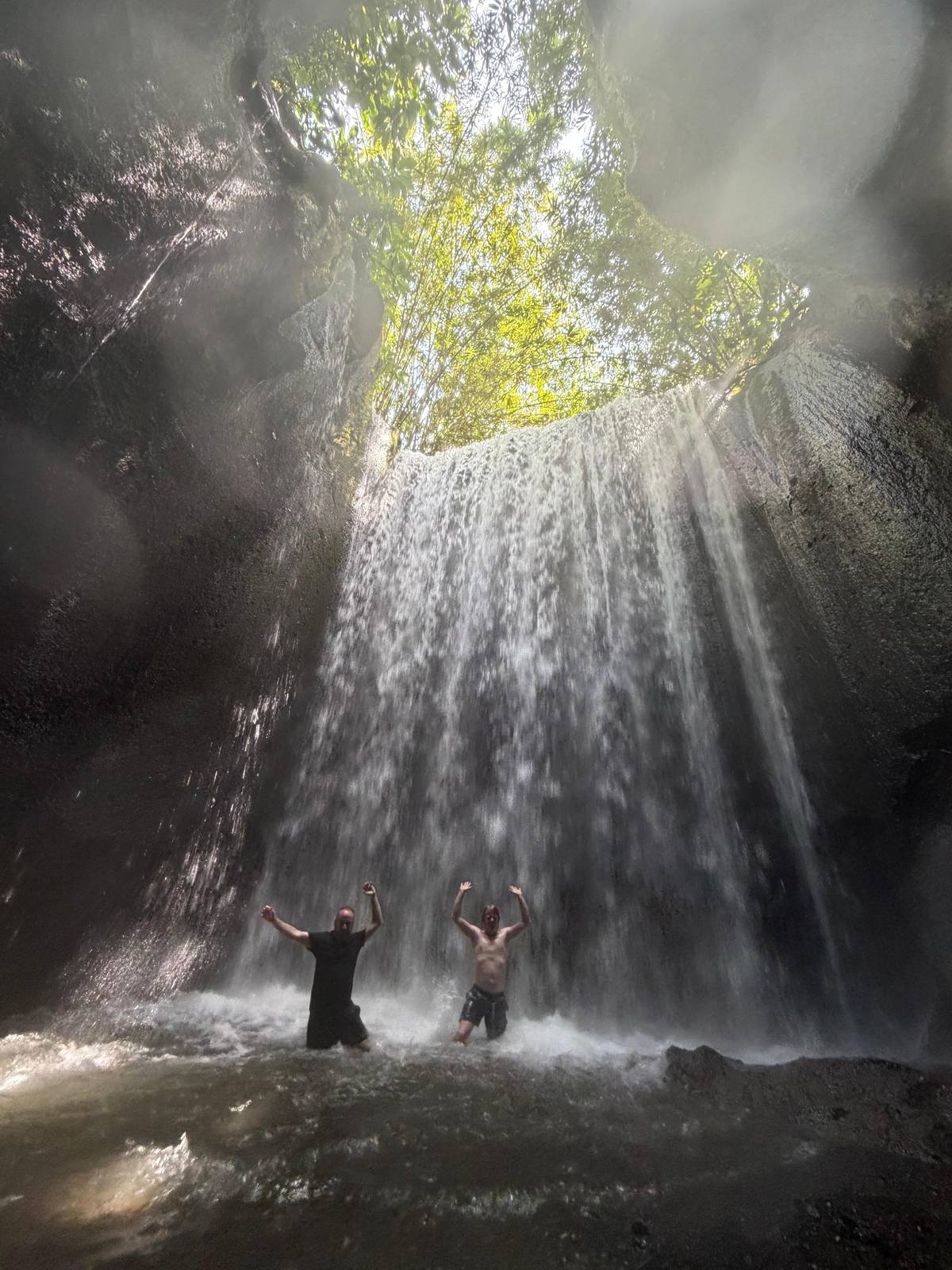
In Google Maps ↗A fall inside a rock cleft, reached by about 200 steps and shallow water.
In Google Maps ↗A single fall into a pool where the site tour allows a swim.
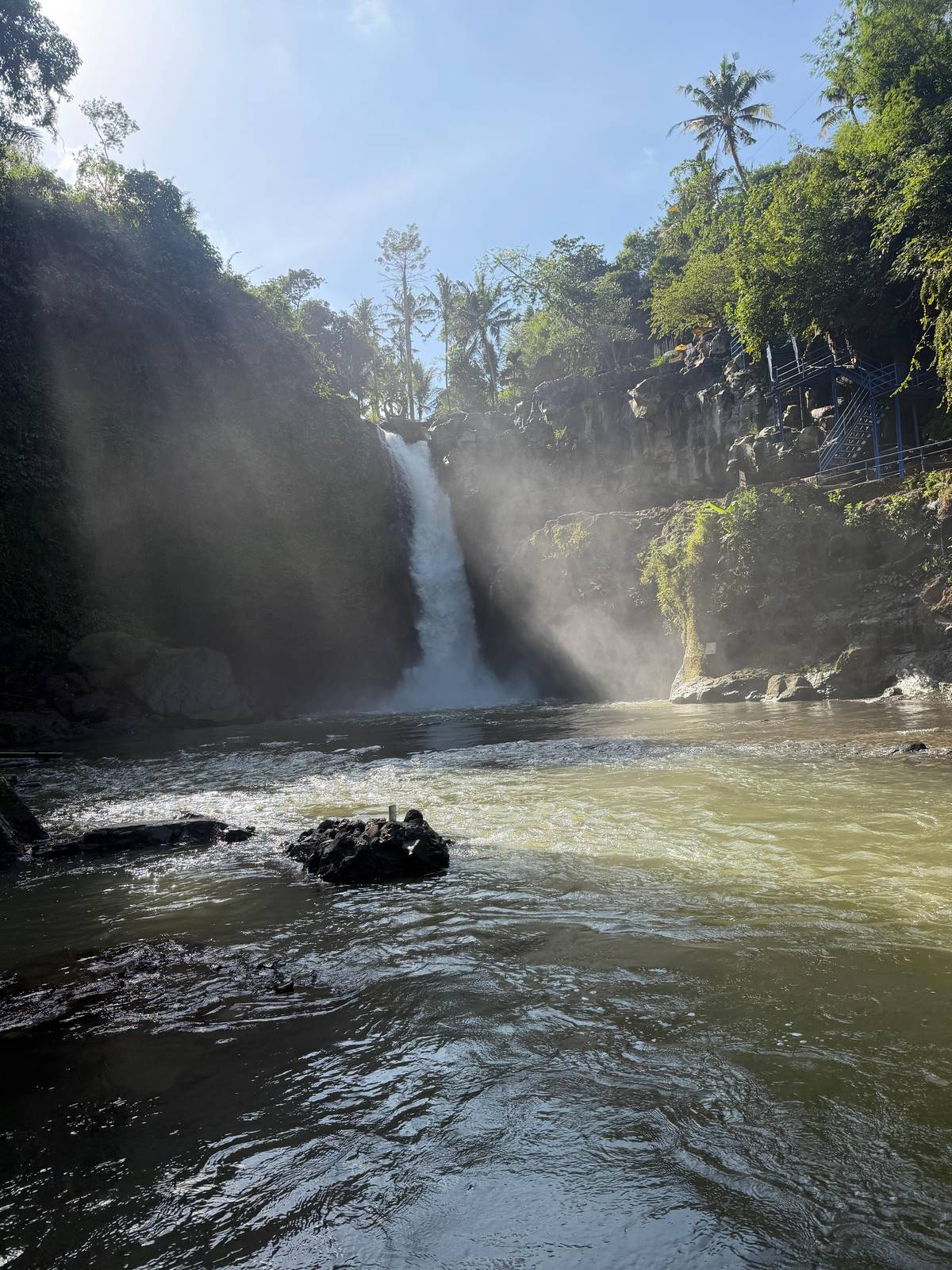
In Google Maps ↗A broad fall in Beng village, Gianyar; busy at peak hours.24
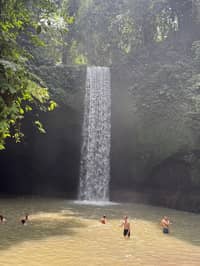
In Google Maps ↗A fall in Gianyar with a pool where visitors swim.2526
In Google Maps ↗A 1,717 m volcano in Indonesia's first UNESCO Global Geopark.2728
In Google Maps ↗A waterfall in the north of Bali, a private 10-hour hiking day.
In Google Maps ↗The harbour for the speedboat to Nusa Penida, 30 minutes across.
In Google Maps ↗Bali's airport, closed for the 24 hours of Nyepi.2930
In Google Maps ↗Checklist
Party price
Add your party to price a dance night.
Total from$12
per head from $6
Check availabilityThis sum multiplies a listing's GetYourGuide starting price by the number in your party and converts it with the day's ECB rate; checkout shows the binding amount.
Video
Nothing loads until you tap play.
Opposite the palace, the Ubud Art Market fills its lanes with handicrafts made in Bali: woven bags, sarongs, wood carvings, masks, silver and paintings.4 Day tours that stop here usually give it about half an hour, the same as the palace. Some stalls specialize, so if you want one thing done well, such as a carving or a woven bag, look around before you buy.
Prices are rarely written down, and bargaining is expected and good-natured. Decide what an item is worth to you before you ask, start well below the first price, and walk away politely if you cannot agree; you will see the same goods at the next stall. A fair price leaves both sides smiling, and that is the point of the game.
Come early, when the stallholders are still setting out their goods and making their first offerings of the day, or late in the afternoon when the light is softer and the lanes are calmer. Either way, bring cash in small notes. A cloth bag of your own saves a plastic one at every stall.
A few minutes west along the main street is Pura Taman Saraswati, one of Ubud's temples alongside Pura Desa Ubud and Pura Dalem Agung Padangtegal.31 It is often called the water palace in Ubud, after the lotus ponds that line the path to its gate.
The temple is dedicated to Saraswati, the goddess of learning and the arts, which fits a town that lives from its painters, carvers and dancers. The ponds are at their prettiest in the morning, when the lotus flowers open, and the carved gate behind them makes one of the most balanced pictures in town.
Treat it as a temple first. Dress modestly, keep your voice down, and stay on the path unless a sign says otherwise. Dances are sometimes staged in front of the temple in the evening; ask at your guesthouse which shows are on during your stay. In the heat of the day the courtyard cafes nearby make a pleasant place to sit and watch the ponds.
Ubud's museums include Museum Puri Lukisan, ARMA, Museum Rudana, the Neka Art Museum and the Blanco Renaissance Museum.22 Puri Lukisan, a short walk from the palace, opened in 1956.10 It grew out of the Pitamaha cooperative founded in 1936 by the King of Ubud, his brother and the painters Walter Spies and Rudolf Bonnet.9
The Manila-born painter Antonio Blanco lived in Ubud from 1952 until his death in 1999, and a museum in town carries his name.3222 ARMA, south of the center, is also one of the town's Kecak venues.
If you have a rainy afternoon, these galleries are the best way to understand what you saw in the palace carvings and the market stalls. Start at Puri Lukisan for the classic Balinese styles, then move on to the private collections for the painters who came later. The collections are compact, and two of them fit comfortably into one afternoon.
If you stay in Ubud, walk. The palace, the market, the water garden and Puri Lukisan are all close together, and the town is small enough to explore on foot.33 Visit the palace in the morning, the market before lunch, and come back to the palace courtyard for the evening show. Wear shoes you can slip off easily if a guesthouse or shop asks you to leave them at the door.
If you stay on the coast, a day tour is easier. A private day through the town gives the palace and the art market half an hour each, alongside the Monkey Forest, a waterfall, a swing, the terraces and Tirta Empul. Its shared option meets in front of the palace at the corner of the market.
The private waterfall tour sold on this site does not stop at the palace, but guests staying in Ubud may be back early enough for the evening show. Book the dance for the same night and you end a day of terraces and waterfalls with music in a royal courtyard. Keep the evening light: after a long day outdoors, the show is a gentle way to end it.
Your day in Ubud
Pick a date, get collected in the Ubud area, and cancel free up to 24 hours before.
Into some parts. Some areas are open to the public; the royal family still lives in the rest.3
Daily at 7:30 PM. It lasts about 90 minutes; arrive at least 45 minutes early for a good seat.
No. The palace dance ticket is listed as non-refundable, so book it once your plans for that evening are fixed.
Built 1800 to 1823. It was built in its present form under Tjokorda Putu Kandel, who reigned 1800 to 1823.6
Balinese handicrafts. Bags, carvings, sarongs and more, made in Bali; bring small notes and bargain kindly.4
On the main crossroads. Where Jalan Monkey Forest meets Jalan Raya Ubud, at the heart of the town and a short walk from the market.2
Yes, on several nights. Kecak tickets cover several venues, including ARMA, with shows starting at 7:00 PM.
Sources